The Robot Is a Tool
The Robot Is a Tool
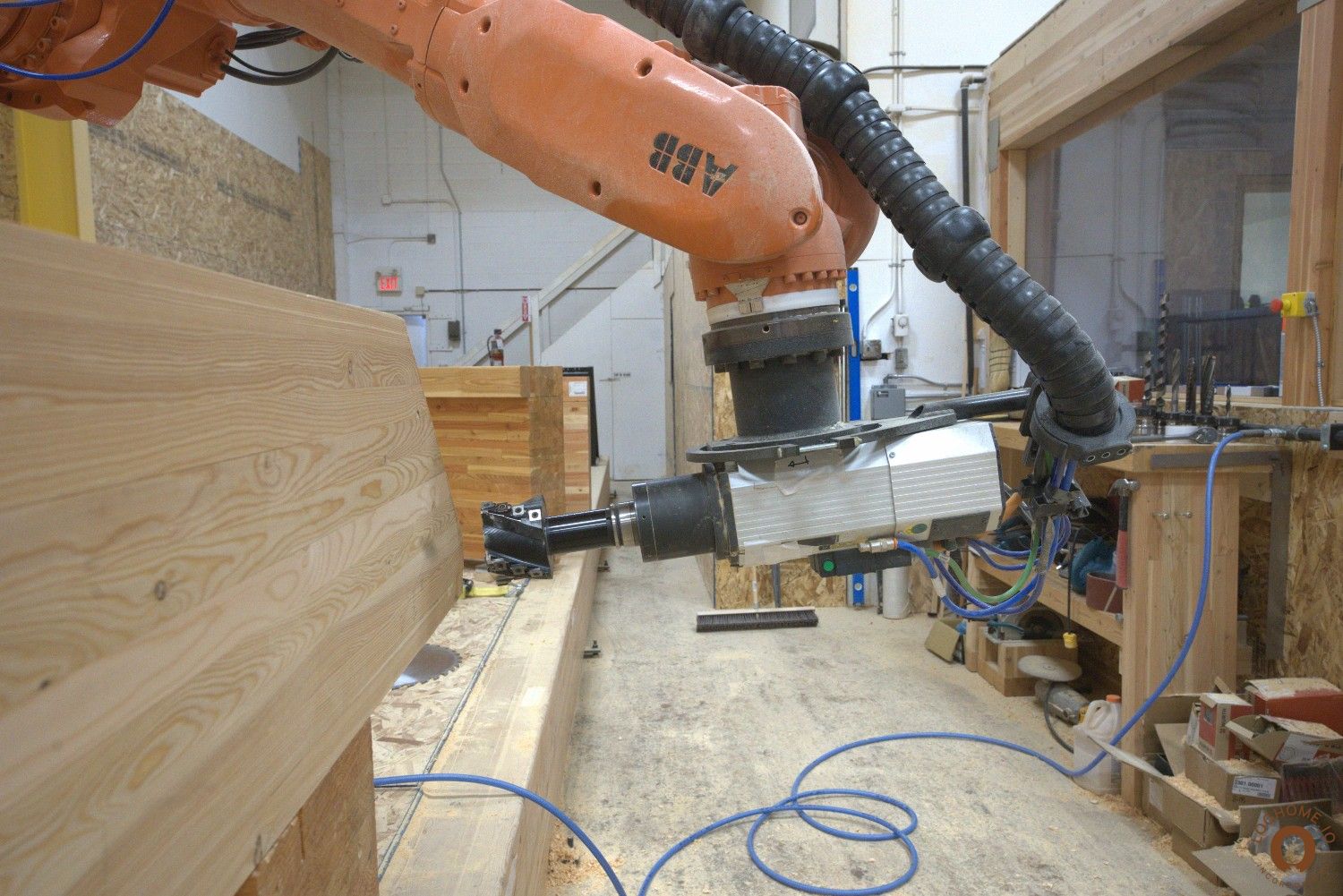
The robot is not designing the home and it is not deciding what makes a good log. It is a flexible machine that can put tools in calculated positions around a large, irregular workpiece.
One of those tools is a chainsaw.
A chainsaw is extremely effective at removing wood from large logs. Put it on an industrial robot and control its path from calculated geometry, and it becomes a very different manufacturing tool.
The scanner measured the log. The software calculated what needs to happen. The robot now turns those calculations back into wood.
Different Log, Different Program
Different Log, Different Program
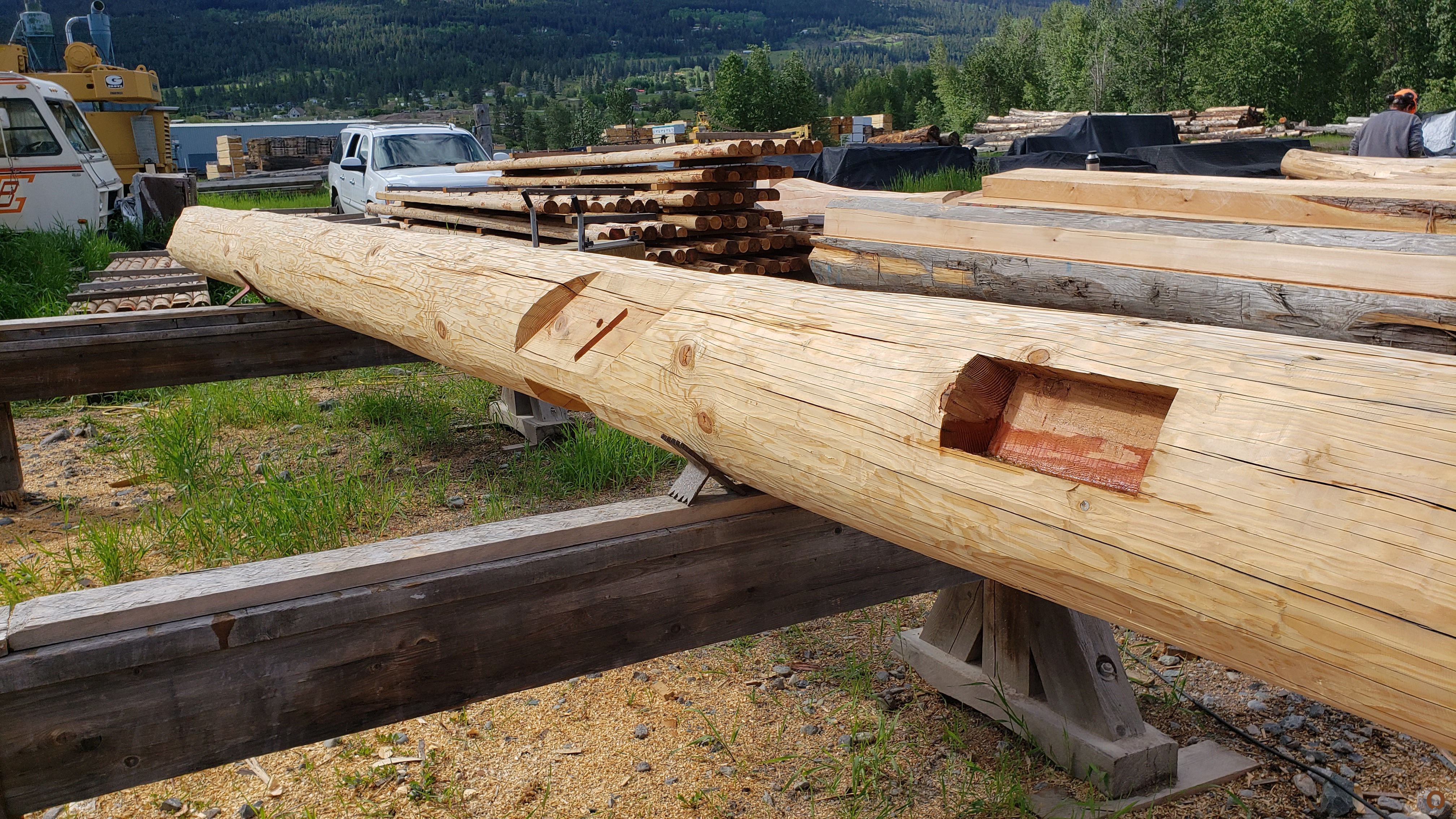
Traditional automation works best when thousands of identical parts need thousands of identical operations. Natural logs give us almost the opposite problem.
The machining for one log can be completely different from the next because the manufacturing data belongs to that specific log.
That is the point of the system. The computer and robot do not make the logs identical. They allow us to work accurately with the fact that the logs are not identical.
And substantial timber is not an exception. We have machined logs around 30 inches in diameter. The practical limits depend on the geometry, handling and available machine envelope.
Trust the Process. Check the Result.
A digital workflow removes many sources of error. It does not abolish them.
Wood can move. Tools wear. Sensors have limits. Equipment needs calibration. And people can still make mistakes.
Connections, orientation, identification and other project-critical features are checked as appropriate before the components leave production.
The exact checks depend on what we are manufacturing. The important part is that problems are much easier to deal with here than after several tonnes of timber have arrived at a building site.
A Building, Not a Random Pile of Logs
A Building, Not a Random Pile of Logs
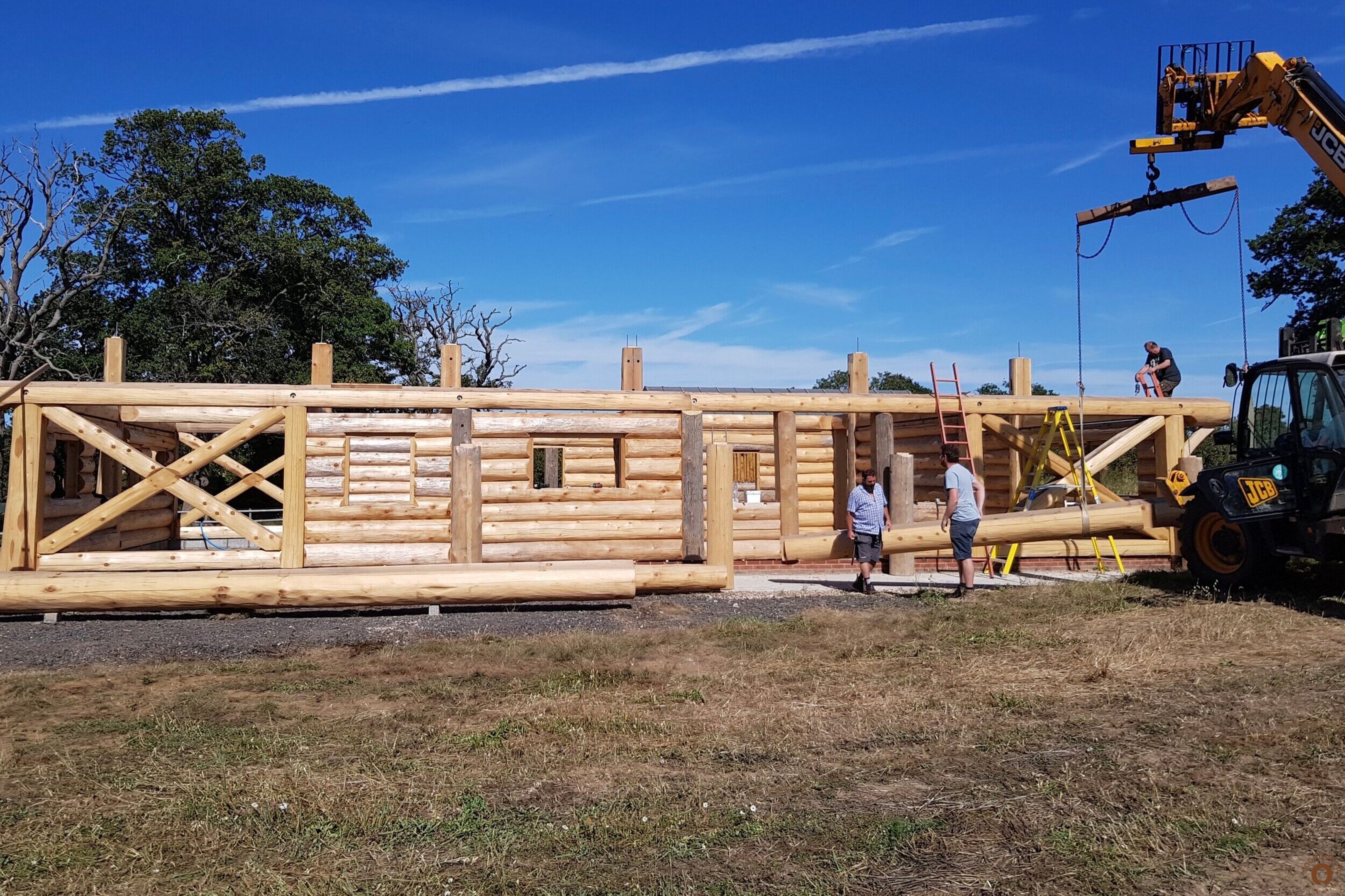
Every manufactured component belongs somewhere.
Identification, sequence and packaging should help the builder understand what arrived and where it belongs. The site crew should not have to reverse-engineer the building from a truckload of timber.
The same principle applies to fitting. The more geometry we resolve during manufacturing, the less time the builder needs to spend reproducing that work with a chainsaw on site.
There will always be construction work. The point is to put each kind of work where it belongs.
We Manufacture. You Build.
We Manufacture. You Build.
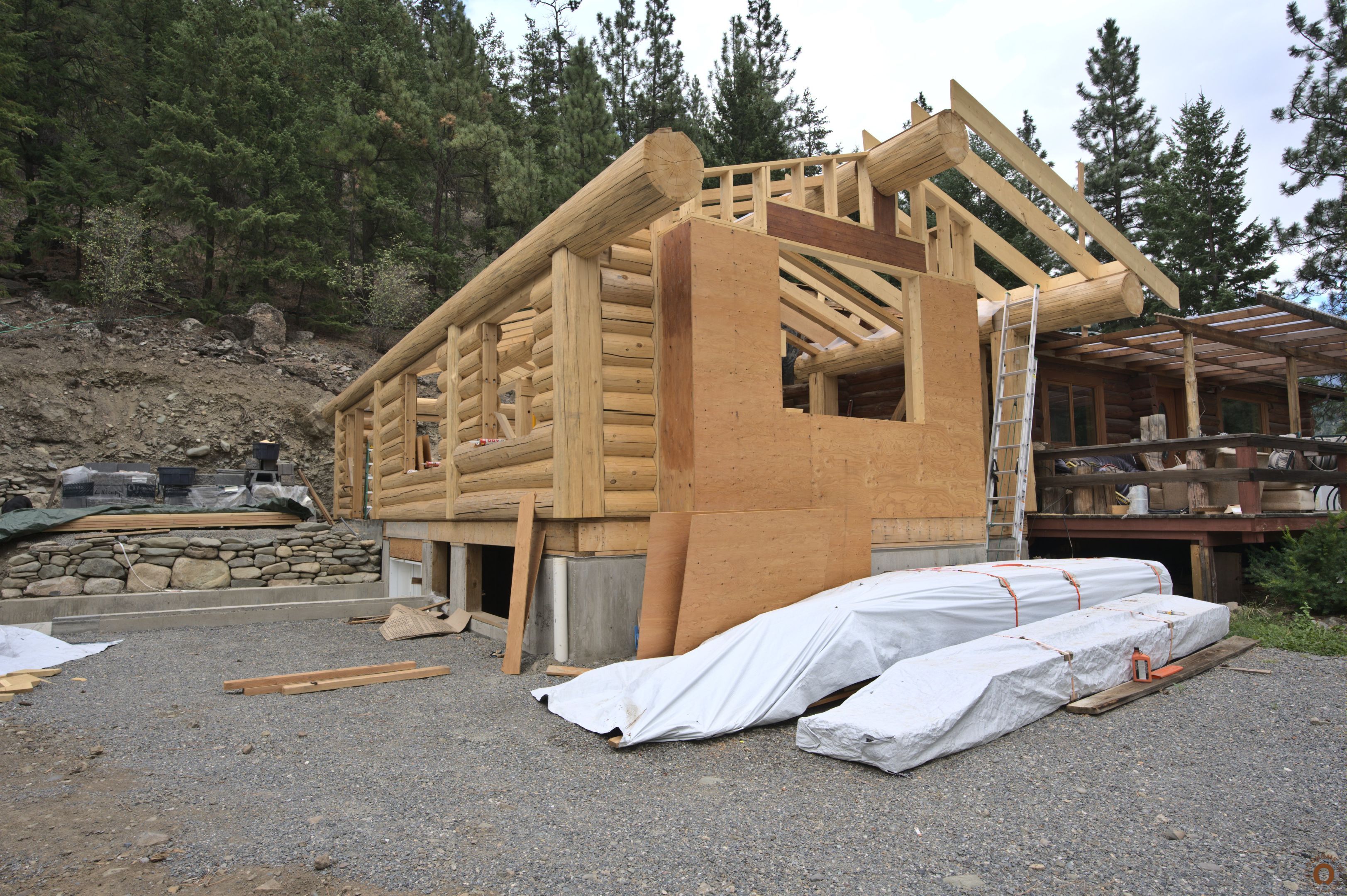
Our preferred relationship is straightforward: you know how to build. We have the technology to manufacture the natural-log components.
We do the scanning, calculations and machining where the equipment is. You receive known components and build the structure where the building belongs.
Site time is expensive. In a Canadian winter, that is not a theoretical advantage.
How we work with buildersWant the hard numbers? Go to For the Nerds