There Is No Universal Best Species
There Is No Universal Best Species
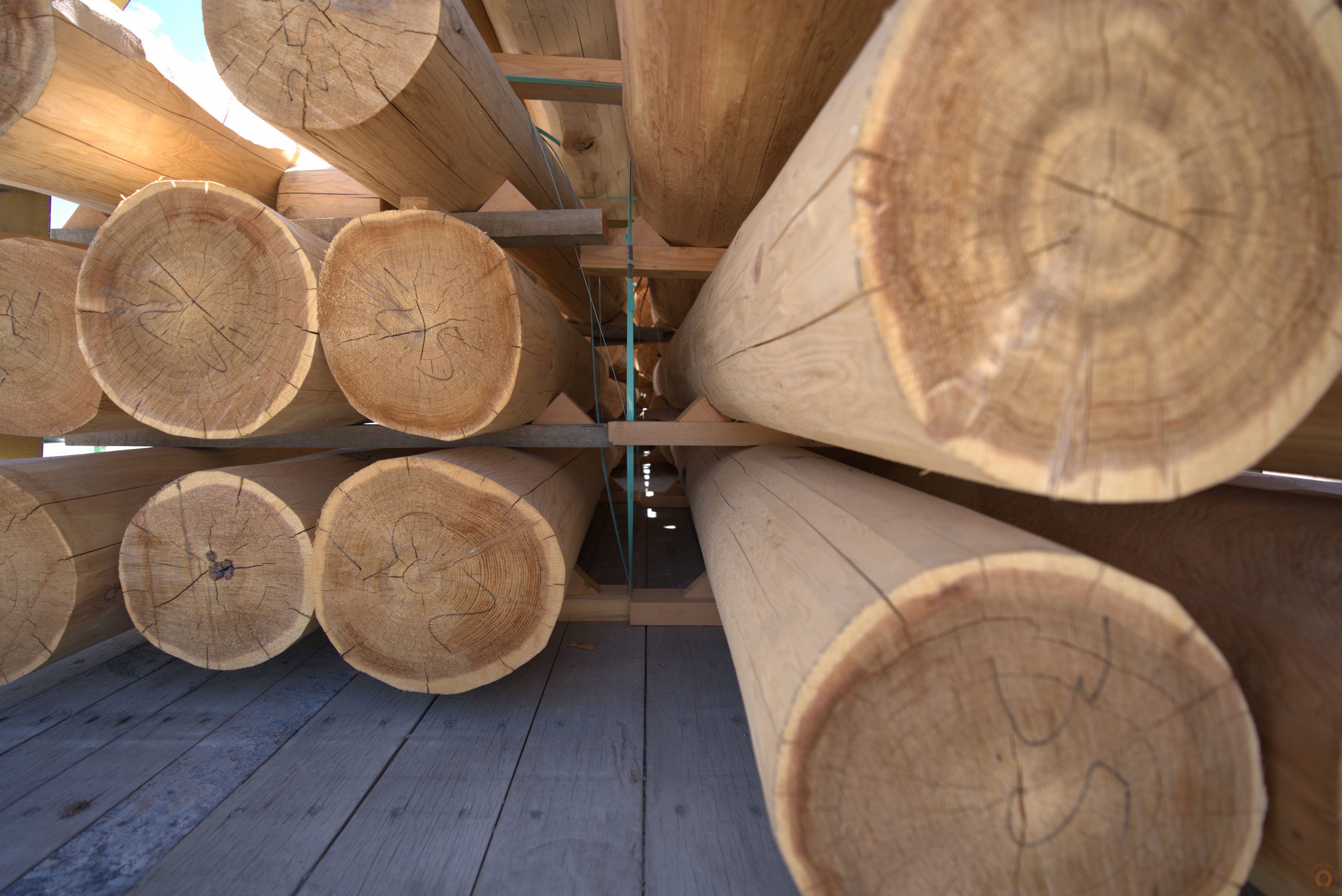
The best species depends on where the building is going, what timber is available, the required log sizes, appearance, budget and how the material behaves as it dries.
A species that makes sense for one project may make little sense for another simply because suitable timber has to be transported halfway across the continent.
We would rather look at the actual project and explain the trade-offs than declare one species magically superior.
White Pine
White Pine
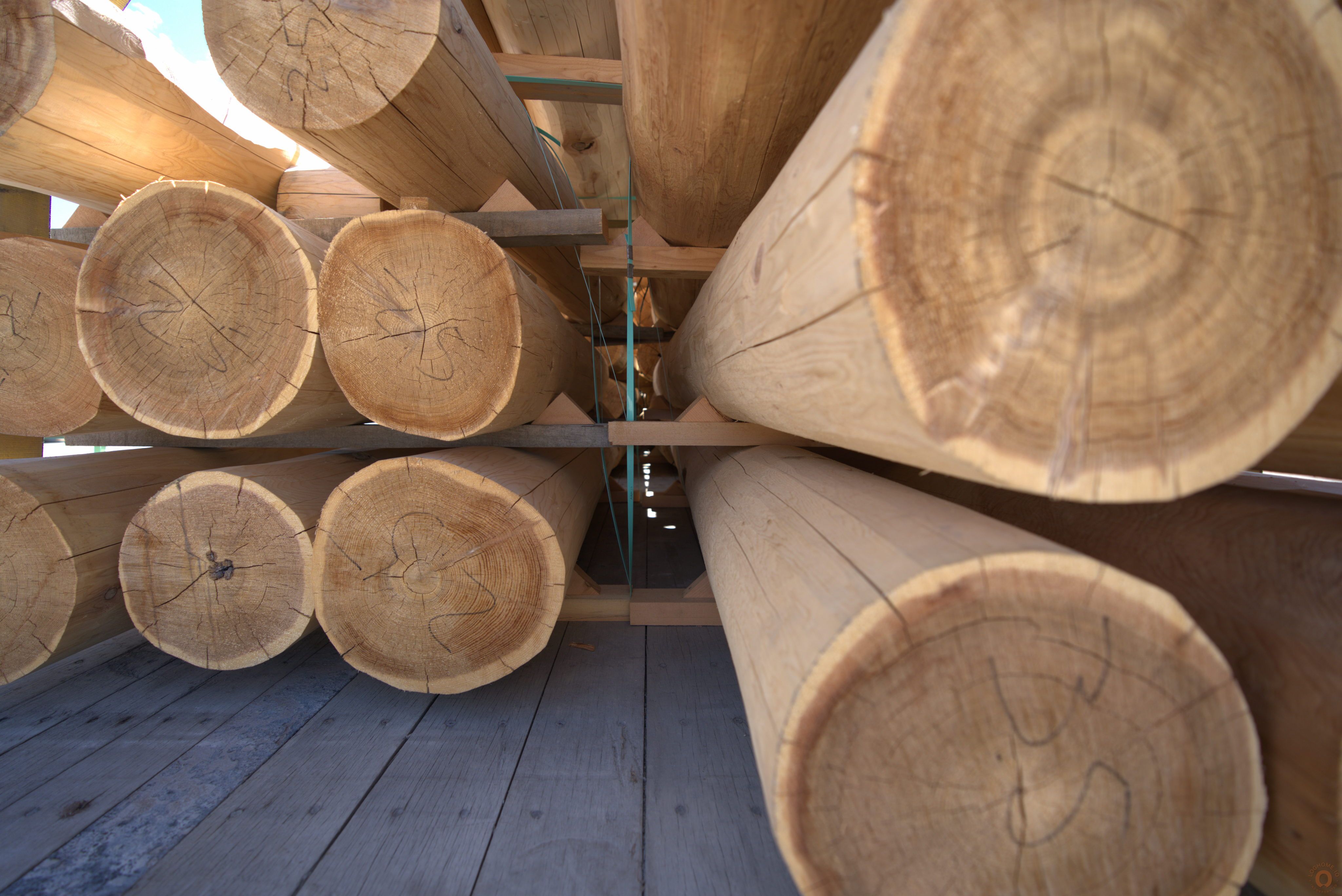
White pine is particularly well suited to the kind of large natural-log construction we do. It can be available in the diameters and lengths needed for substantial wall logs and structural components without becoming unnecessarily difficult to handle.
For wall panels, we generally want logs around 14 inches in diameter. Posts are commonly around 16 inches. Larger timber is not a problem for the manufacturing process; we have machined logs around 30 inches in diameter.
White pine also gives the finished building the light, natural appearance many people associate with traditional log construction.
Other Species
White pine is not a requirement. Other suitable species can be used depending on location, availability, design and the timber available for the project.
This is especially important when a builder already has a timber supplier, or when the logs come from the customer's own property.
We can work with timber supplied for the project rather than requiring every building to start with logs from our own source.
Your logs or oursThe Numbers Belong With the Numbers
Density, moisture content, shrinkage, thermal resistance and other material properties matter. But a number without its conditions and assumptions is not particularly useful.
That is why we keep the detailed material properties, calculations and test data separate from the general product pages.
We're not going to bury you in technical detail unless you want it. But if you want it, we've got it.
See the wood and material data